
August 2014
The main problem:
EHRs were designed to document the provision of health care as it was just delivered. Most EHRs arose from a programming background emphasizing billing and claims processing; software’s priority was data capture of past transactions. As a consequence, systems were not designed to provide sophisticated guidance to health care practitioners for “what comes next” in the care of a patient. With some important exceptions, the most important part of a patient’s medical care is the ongoing plan, and – unfortunately — EHRs still don’t effectively facilitate planning the future of a patient’s care.
and what we need to watch out for:
we have succumbed to an all-consuming demand for privacy of health care information without considering the implications.
We should make sure that effective treatment isn’t handcuffed by Kafkaesque laws.
In a recent JAMA article, researchers investigate whether patients with hypertension can be trained in self-management of their condition.
A primary care, unblinded, randomized clinical trial involving 552 patients who were aged at least 35 years with a history of stroke, coronary heart disease, diabetes, or chronic kidney disease and with baseline blood pressure of at least 130/80 mm Hg being treated at 59 UK primary care practices was conducted between March 2011 and January 2013.
The intervention group used an automated blood pressure device and changed their medications based on individualized self-management algorithms. I would have preferred a blinded study, but I imagine that would be difficult—if not impossible—to manage.
The study found a moderate reduction in systolic blood pressure, in accordance with their primary goal.
After 12 months, the mean blood pressure had decreased to 128.2/73.8 mm Hg in the intervention group and to 137.8/76.3 mm Hg in the control group, a difference of 9.2 mm Hg (95% CI, 5.7-12.7) in systolic and 3.4 mm Hg (95% CI, 1.8-5.0) in diastolic blood pressure following correction for baseline blood pressure.
The intervention group ended with higher doses and number of medications, but that didn’t seem to translate into an increase in adverse effects. There was no difference in quality of life measurements.

Only 1.201 (~16%) of the 7.411 invited patients accepted the invitation. Because of this selection bias, one cannot extrapolate the study to the general public. Also, fewer men than women dropped out of the study, which introduces a gender bias. Since the study mainly included patients who were mostly white, from a professional or skilled manual background, it is easier to generalize the study for the Nordics than for all of UK or the U.S.
One should remember that blood pressure is only a surrogate end-point. The study did not review any hard end-points. Therefore this research paper should only be used to conclude whether self-management of blood pressure leads to a stricter adherence to guidelines—which seems to be the case. Whether this translates into health benefits is difficult to conclude.
The main takeaway from this study is that it is possible for a subgroup of patients to regulate their own blood pressure medication without the need to visit a doctor and still adhere to guidelines. That begs the question: How does this translate into mHealth?
Health data privacy advocates like Dr. Deborah C. Peel have been writing and discussing this problem for a long time. And people on Capitol Hill are becoming increasingly interested.
“If Apple is really doing this, if they’re really saying to developers that you can only use the data for the specific purpose that app provides the user, and that they can not share the data with anyone else without informed consent, that is the victory of victories,” Peel told VentureBeat.
“That’s what we’re seeking from all of the 100,000 of the companies that are now selling health data,” Peel says.
Hannibal ad Portas
Well, maybe not Hannibal, but the risk of tipping the balance of healthcare towards private institutions and thereby increasing social rift in the Nordics, is probably one of the ugliest of enemies to our welfare-based societies.
I recently elaborated on why the Nordics should invest in digital health infrastructure. In that post I briefly touched on the fact that large technology companies are already taking steps towards building digital health platforms of their own design.
The healthcare system is an area in which the government has always upheld strict control. Apart from disagreements regarding minor details, I would say that most believe the healthcare system to function rather well. Yes, it needs some minor nudging and improvements at times, but overall it is quite safe and effective. Even as the government plays the balancing competitor to private interests in other markets, private companies are the challengers of tradition-bound healthcare institutions:
- Establishment of the Norwegian Feiring Clinic challenged and helped improve the treatment of patients with heart disease
- The Fürst Medical Laboratory has forced Helse Stavanger to finally fully digitize their biochemical department,
- and most recently the Aleris Clinic in Denmark has released a telehealth app for easy access to their doctors. If successful, it is probably just a matter of time before citizens in other Nordic countries will be granted access to similar services, since Aleris has multinational presence.
As I’ve stated before, there isn’t any hard scientific evidence for digital health improving treatment, but there is no denying the fact that the public has a great demand for easier and more convenient access to healthcare. Some doctors are hesitant in fear of increased medicalization and additionally burdening an already overstretched healthcare staff. In my own—utterly unscientific—experience, patients who have digital access to my practice have a tendency towards occupying less off my time.
Only time and experience will tell us how the digitalization of medicine will play out, but I’m convinced that the established healthcare institutions cannot afford to stay on the sidelines, while private organizations shape the future of Nordic healthcare.
Tilsammen udgør disse 15 forsøg et usædvanligt stærkt og ensartet grundlag for at vurdere værdien af regelmæssige sundhedstjek, og vi kan med stor overbevisning sige, at sundhedstjek af raske ikke har nogen positiv effekt.
An example of how wearables can be used in never before seen research.
Boosting digital health innovation in Norway - an introductory guide
With Snowden’s NSA revelations, it has become clear that drastic steps need to be taking to safe guard patient health data. The Norwegian government was foresighted when it established The Norwegian Health Network (NHN), through which all electronic healthcare messages are conveyed. NHN’s main focus has been security. This has resulted in a monopolized network, which is difficult and expensive to connect to. Innovation is stymied and limited to a small number of companies. Because of the rigidity of NHN, the system’s culture implicitly hampers innovation. Once companies have been certified by NHN, they use lock-in mechanisms to bind their customers to expensive subscription models. The status-quo becomes profitable, and must be maintained. A more open system will increase competition, and enable independent developers to break into the market. In order to disrupt this status-quo, these developers will need to bring their A-game. In turn, healthcare providers and patients will profit.
The government should continue to focus on developing the critical back-end systems. At the same time, they should adopt the strategies of large technology firms such as Apple, Google, and Microsoft, to sway independent apps and software developers to the platform. Strategies could include, but not be limited to:
- Continuous innovation
- Short update cycles
- Adaptive guidelines
- Dialog with developers
- App Stores or Libraries
APIs
Developing APIs which ease integrating healthcare data and advanced functionalities into apps is a must. This has proven to be a viable strategy for software companies wishing to expand their market reach, empower users, and improve their user experience. In many cases, combining several APIs can result in synergistic effects, such as the If This Then That platform. Governments alone can collect massive amounts of data, but the endeavor becomes meaningless if citizens have no easy way to access the data.
Certified apps
In spite of thousands of available health related smartphone apps, users really do not have any way of knowing whether a given app is medically safe or useful. The FDA is developing regulations for smartphone apps, but the European Union is straggling. The NHS of UK has taken it upon themselves to curate a medical app library. Apps are reviewed in order to ensure that they:
- Are relevant to people living in England
- Use information from a verifiable or a trusted source
- Comply with the Data Protection Act, to make sure that they hold and use your information appropriately
- Are not potentially harmful
The idea is brilliant, albeit the implementation is subpar. With an improved design, better highlighting of apps, better search, and a higher level of user engagement Certified App Libraries could drive medical app adoption and help increase the revenue of independent developers. This could be the enticement independent developers need to finally disrupt healthcare IT.
Why we should invest in digital health infrastructure
I just wrote a dismissive blog post about the British telehealth study, concluding that governments are better off investing in software infrastructure which enables developers to build mHealth and digital health applications. I didn’t comment on the fact that telehealth can be an effective way to treat patients in remote locations, or simply remove the need for patients to physically travel to a doctor’s office. Lots of time and gasoline can be saved by this simple fact. Of course, one doesn’t need old telehealth units for this. A smartphone with a decent front facing camera and a wireless connection will suffice. With that said, let me elaborate more on why I believe medical apps are the future of medicine.
Can’t stand in the way of progress
With the increasing number of health related apps and wearables, it is difficult to argue against the fact that consumers will use smartphone apps. A plethora of 7 minute workout apps are downloaded by users who wish to become more active, it is possible to measure heart rate and blood oxygen saturation simply by using a smartphone camera, it is possible to conduct a complete smartphone physical, and smartphone connected activity trackers are selling well. Apple, Google, and Samsung have already deployed health platforms and are partnering with health care facilities in order to expedite digital health through consumer devices. The writing is on the wall: Digital health through consumer devices is here to stay. Unfortunately, the entire field is a tangled mess, and it is difficult for consumers to assess whether an app can help them or potentially harm them.
Taking care of the grunt work
I’m not able to point to a singular study which shows that medical apps and wearables keep people healthy, so lets not use that as an argument for large scale adoption of medical apps. Instead, lets focus on better usability and user satisfaction. Smartphone apps are great for data gathering, and diabetes, blood pressure, or headache diary apps can easily replace the pen-and-paper diaries used today. Doctors can glance at a data chart on a smartphone to get a general idea of the patient’s blood glucose fluctuations. This saves a lot of time for both patient and doctor. Time, which could be spent towards better treatment of the patient. I’m not arguing that everyone should use medical apps all the time—but imagine if a doctor could prescribe an app instead of medication. There wouldn’t be any pharmacological side-effects, and the app data could help spark a conversation and understanding of the patients situation. The potential is huge.
I believe some doctors are opposed to medical apps out of a fear of becoming obsolete, or losing their medical footing. In reality, medical apps will never replace doctors. They are meant to alleviate some of the grunt work, and help doctors connect with patients on a higher level. We just need to be selective in which apps we promote.
I’ve had a mind to review the Whole System Demonstrator cluster randomized trial for some time. To my knowledge, it is the most comprehensive telehealth study to date—but contrary to popular belief, the study shows that telehealth in its current form isn’t viable!
The study population is randomized and rather large, spans a whole year, a control group has been included to account for regression-to-the-mean errors, and the researchers have made reasonable adjustments for cofounders.
The study addresses telehealth as a possible panacea for the challenges faced by future healthcare:
Efforts worldwide are dealing with the increasing prevalence of chronic disease among an ageing population. The past decade has seen the growing use of telehealth as one possible approach to this problem. Telehealth involves the remote exchange of data between a patient and healthcare professionals as part of the patient’s diagnosis and healthcare management. Examples include the monitoring of blood pressure and blood glucose. Telehealth may help patients to better understand their health conditions by providing tools for self monitoring, encourage better self management of health problems, and alert professional support if devices signal a problem. As a consequence, telehealth promises better quality and more appropriate care for each patient, as well as more efficient use of healthcare resources by reducing the need for expensive hospital care.
The trial was conducted at three sites. Notably, the standard of care was not consistent between these sites, but they all had basic telehealth capabilities:
We included a broad class of technologies, and the study was not designed or powered to examine differences between specific devices or monitoring systems. Although sites used different protocols for allocating peripheral devices, they all used a pulse oximeter for chronic obstructive pulmonary disease, a glucometer for diabetes, and weighing scales for heart failure.
Communication with the patients either went through a telehealth unit or a TV-box set. These technologies are similar to what is currently available in Norway (1, 2, 3).
Overall, I find this study to be well prepared and executed, and I’m impressed with the sheer size of the undertaking. It is therefore interesting that the study failed to show any clinically relevant improvement in the intervention group. Unfortunately, the abstract leaves the reader with the opposite impression. I stipulate that this is due to publication bias and pressure placed on the researches by their employer.
The study seems to have one large flaw, which the researchers discuss, but are unable to account for.
After the initial increase in activity for the control group, rates of emergency admission for the two groups began to converge, although a difference in favour of the intervention group seemed to persist for the entire follow-up period.
Although they can’t explain the findings, they do present some interesting remarks (my emphasis):
Differences in hospital use were at their most marked at the start of the trial, when we observed a distinct increase in admissions for the control group. If we excluded activity from the first three months of the trial, differences in the admission proportion would not have been significant under any of the models. Therefore, this increase has implications for the interpretation.
In addition, the primary outcome of the study wasn’t significant either (my emphasis).
Among a set of patients with chronic obstructive pulmonary disease, diabetes, or heart failure, this study has shown that a smaller proportion of telehealth users than controls were admitted to hospital during a 12 month follow-up. This effect remained significant after adjusting for baseline characteristics and for a predictive risk score. However, the magnitude of the group difference in admission proportion was relatively small (10.8%, 95% confidence interval 3.7% to 18.1%), and smaller than the size that the planned study design was able to detect (17.5%), raising questions about the clinical relevance of the results.
The study failed to show a reduced mortality rate after adjusting for cofounders. Most other differences were statistically or clinically insignificant. Cost-effectiveness couldn’t be shown either.
Crude differences in notional hospital costs to commissioners of care were also not significant and were relatively small (£188 per head over 12 months), especially compared with the potentially high costs of these types of telehealth intervention.
Although telehealth has been hypothesized to be a viable method for follow-up, and prevention of chronically ill patients, no study has been able to verify this statement.
Current telehealth solutions are single purpose combinations of tailor-made hardware and software. This makes them expensive and difficult to implement. The technologies quickly become obsolete, especially as future generations will expect to be allowed to bring their own devices (i.e. smartphones). I suggest that governments and hospitals frog-leap the old telehealth technology. Instead they must invest in software-based telehealth infrastructures which utilize the increasing number of medical apps, smartphones and wearables. This will result in lower costs, quicker implementation, better compliance, and (hopefully) better results.
The future of Danish hospitals. It will be interesting to see just what new “technological solutions and new work flows” they will implement.
FDA has added an application programming interface to its openFDA initiative that allows researchers and other users to access medical device adverse event reports submitted to the agency since 1992. However, officials warn that the data could be incomplete and should be used in context of other information.
The FDA jumps on the API wagon. Good. Now lets hope the Nordics follow suit.
Jeg har lenge lobbyert for punkt 8 - fint å se at Kreftforeningen er enig.
“En tydelig strategi for bruk av ny teknologi i helsevesenet med en forpliktende plan i forhold til:
- Tilgang og deling av informasjon på tvers på av helseforetak og behandlingsnivå som understøtter pasientsikkerhet og kontinuitet i pasientforløpet
- Etableringen av en sammenhengende elektronisk journal som gir pasientene tilgang på fullstendig journaldata, uavhengig i hvilket journalsystem dataene er registrert og lagret.
- En helseportal som sikrer en felles inngangsport til helsetjenesten på nett med tilgang til egne helsedata og interaktive tjenester for pasienter/borgere som gjør at brukerne og leverandørene av helsetjenester kan kommunisere elektronisk på en sikker og hensiktsmessig måte på linje med hva en ellers kan i samfunnet
- Etablering av “Egenjournal” som en tjeneste på Helseportalen hvor pasientene kan legge inn informasjon om seg selv og som virkemiddel til å mestre sin hverdag med sykdom. Egenjournal bør integreres med pasientjournalen.
- Et tilstrekkelig fleksibelt og forståelig lovverk som understøtter pasientsikkerhet og pasienters behov for oversikt og kontinuitet balanseres opp mot personvernhensyn på en operativ og forståelig måte
- En felles Nasjonal eID på tvers av sikkerhetsnivå som gjør det enkelt å bruke helseportalen
- Tilgang til kvalitetssikret og oppdatert informasjon som sikrer at pasientrettigheter blir reelle for flere og at pasienter kan gjøre reelle valg
- Åpne plattformer som gjør at både private og offentlige aktører kan være med på å utvikle og bidra til utvikling at ny teknologi i helsesektoren”
They’re getting a major head start on other pharmaceutical companies.
Give today’s youth a goal and there’s no limit to what they can achieve. In part, because they’re not bound by rules.
Studiet er et godt eksempel på hvordan gentagne målinger over tid kan benyttes til diagnostik og forebyggelse, ikke bare inden for diabetes men også andre sygdomskategorier.
The survey, which was conducted from May 2014 to June 2014, is a follow-up to a survey the research firm did in September 2013 of 500 wearable device owners. In the previous survey, the researchers found a third of consumers who own a wearable device stopped using it within six months.
Since then, the number of consumer who have stopped using their wearable device has not changed, but in the most recent six month period, three times as many US consumers said they have obtained a wearable device compared to the previous six month period. While in the last six months, 1,024 consumers obtained wearable devices, in the six months before that, only 322 did.
It looks like wearables are here to stay.
This is a practice that mHealth providers should refrain from using.
Public trust and research on personal health data
To protect patients against overzealous researchers, the Declaration of Helsinki was adopted by the 18th World Medical Assembly in 1964. It is a tool for preventing mistakes such as the Tuskegee Study
Currently, there is an increasing disregard for the Helsinki declaration. In my opinion, it is partly due to the blurred line between marketing and scientific research. Companies such as Facebook and OK Cupid admit to overstepping ethical, but not legal, boundaries. I believe it is safe to assume that other social companies apply similar methods for marketing and research. As Big Data simplifies data gathering, healthcare facilities are also employing some dubious research methods.
These actions erode public trust, patient rights and safety. Eventually, patients will resist supplying data for research purposes. This is unfortunate, as much can be learned from our current and future healthcare databanks. Research on public data and EHRs need to be grounded on informed consent, be anonymized, and securely stored. Underprivileged individuals should not be tempted into donating their data or tissue to research. A public discussion amongst researchers, doctors, computer engineers, government officials, bioethicists, and patient advocacy groups, should preemt any data gathering endeavors in order to prevent tainting the reputation of health data research.
The Nordic countries are well suited for pioneering health data research, because of their longstanding democratic governments, inclination towards open debate, and homogenous, nationalized healthcare systems. The NOKLUS study in Norway shows that an ethical approach is feasible. The challenge is to apply the same principles on a larger scale.
Nordic patients have the ability to contact their doctor electronically. Currently, doctors do not prioritize these contacts, partly because the economic incentive isn’t there. By compensating doctors sufficiently, waiting times and general health expenses could be significantly decreased. Politicians need to see past the initial increased cost and compensate doctors fairly.
Smartphones offer us incredible new opportunities for implementing efficient clinical research trials. They allow researchers to simplify complexities that have traditionally surrounded clinical research with tools that are now easily accessible to both practitioners and patients. Smartphones can be used to gather critical information from an enrolled patient including factors such as weight, blood pressure, glucose levels, and more. Not only can smartphones be used to automate and speed up information entry, they offer ways to improve the methodology and accuracy of research.
The article briefly mentions cybersecurity. In my opinion, that is one of the biggest hurdles to overcome.
The Danish government, Local Government Denmark and Danish Regions paved the way to Denmark’s telemedical succes with the National Action Plan for Dissemination of Telemedicine, launched in August 2012.
One of the most significant findings was that all of the wearable activity-tracking devices examined, including those from leading brands, are vulnerable to location tracking.
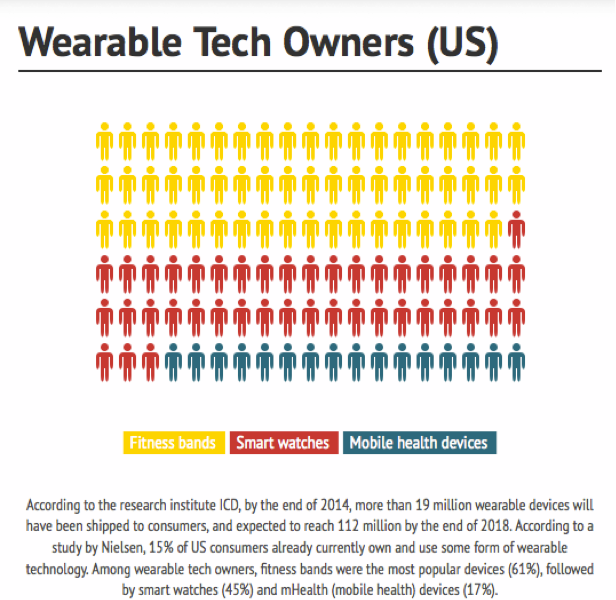
The predictions are impressive, but it’ll be interesting to see what the future will actually bring. Personally, I believe most people will simply use their smartphones, which will be specked out with additional health sensors by 2018.
Det virker til at prosjektet har lang vei igjen. Samtidig er det interessant at man har unnlat å bruke RFID chips.
More to back up my argument about the future of wearables in the clinic.
“I think we will see an explosion of growth in this area,” said Laird. “Technology will allow clinicians to ‘see’ much more clearly how people move both within the clinic as well as in real world situations such as work, sport and home activity.”
The FDA is taking steps to eventually deregulate
While today’s announcement is just a proposal and requires the usual public comment period and so on, the FDA said it would not enforce 510(k) requirements for the devices it listed and it doesn’t expect companies making these devices to submit 510(k)s for them in the meantime.
The FDA is being very practical in not spending unnecessary time regulating devices with a low level of inherent danger. The EU’s regulatory agency on medical devices should take note.
This article tries to put a negative spin on wearables, but with high consumer awareness, interest from all the big tech companies, and a market estimate of 19 billion $ by 2018 it is foolish to think that wearables won’t be play a big part in future health care. They are already a mainstay in diabetes treatment, and I can’t see why that won’t be the case in other fields as well.
A better course of action for the physician is to personally be an active user of the tools. This gets them in the game and familiar with the ins and outs of various options while they wait to see which ones develop a viable long-term business that make sense to push toward patients.
I agree. Wearables and used by lots of patients, and will eventually be used in medicine. Doctors should familiarize themselves with their future tools.
Orbit is a new startup from Norway which just launched a unique text analysis technology platform that uses artificial intelligence and machine learning to recognize and understand languages (in their case that would currently be Norwegian, Swedish and Danish, though more are sure to follow). Orbit aims to facilitate the integration of background context, leaving the journalist more time and energy to focus on producing better content for their articles.
I’m keeping an eye on these guys. This type of machine learning is sorely needed in medicine, especially a system which understands the Nordic languages.

Stanford University Medical Center’s Department of Cardiothoracic Surgery has started using Google Glass in its resident training program. Stanford will use software from Glass app maker CrowdOptic to help train residents on performing cardiothoracic surgery.
One of the few instances I see Google Glass ever being viable is during surgery.
While a resident is operating on a patient, surgeons can use the CrowdOptic software to watch the resident’s progress and send visual feedback to the resident on technique. Before using Google Glass, the company explains, because views are restricted, it was difficult for surgeons to fully understand how the procedure was going from the resident’s perspective.
Other instances would be in a busy ER or for telemedicine calls to off-site specialists.
Each beacon will connect to a smartphone app to pop up with information when a user gets within range. For the visually impaired, the system uses Apple’s Voiceover technology to read out points of interest as they come on screen, though an early version of the app also gives people visual cues for how to navigate to locations from a directory that can be sorted. That means you could tell it to help you find the nearest power outlet to juice your gear, or the nearest coffee shops to recharge your body.
The real challenge is adoption rates: People need to be educated on keeping bluetooth ON, especially since the Bluetooth Low Energy technology, available in all new smartphones, doesn’t consume much power.
Eventually, this technology could be used in hospitals, possibly as a contender to RFID chips. Bluetooth LE has more applications, since it is also supported by Apple, who famously ignored NFC technology completely. RFID tags are less expensive, but you’ll need more of them since they don’t have the same range capability as Bluetooth LE. I expect that we’ll see hospitals using both in the future: RFID tagging of equipment for logistics, and Bluetooth LE for everything else.

The dermatologist responded to the primary care doctor teledermoscopy referral in less than two days on average, while the dermatologist responded to the primary care doctor who referred the patient via traditional means in five days on average. The doctors who triaged patients using teledermoscopy marked 19 patients as high priority malignant melanoma patients.
The ability to attach photos to referrals greatly enhances the ability of the specialist to evaluate the condition and triage the patient accordingly. Hospitals should prioritize technologies which enable this approach.
But threats to medical devices and critical infrastructure may be of even greater concern because of their potential effects on patient health and safety. Patients are especially at risk from attacks that could disrupt critical medical infrastructure, disrupt communications and services, interfere with medical devices, or alter or falsify critical data or make them unavailable. The “internet of things,” which connects physical equipment, such as patient monitors, that contains sensors or actuators and is programmed electronically, has enabled remote and distributed access to many diagnostic and treatment capabilities within health care institutions, but such connectivity has also created opportunity for attacks.
I believe that this threat is much more dangerous, than the mere threat of identity theft. The Norwegian Data Protection Authority and similar agencies should focus more time and energy on these areas.
The Ponemon study suggests that organizations that focus adequately on improving their cybersecurity posture, hire and empower a chief information security officer, and build strong incidence-response capabilities can reduce their potential financial risk from data breaches by 42%.
Just as public health strategies have been developed to detect and track emerging epidemics, identify population risks and vulnerabilities, and prevent or ameliorate adverse effects, analogous approaches can be used to improve cybersecurity in health care delivery organizations.
Health care organizations can no longer assume that they are immune from organized attacks like the one described above.
Well, I come from the future, and I’m here to tell you: transcending the limits of the flesh can be downright dull.
Basically, subcutaneous skin implants are more hype than useful.
A year and a half later, I bought an NFC chip, deciding that if it was even a fraction as much fun as the magnet, I wanted it. It wasn’t hard to find. The site Dangerous Things sells a passive tag — a chip that doesn’t require a battery to work, like the ones you find in rings or business cards or stickers — pre-loaded into a syringe and packaged with plastic gloves and disinfectant.
Currently, only the most dedicated feel the need for such implants.
What I have feels like a piercing that can incidentally hold a kilobyte of data, and someone online very aptly compared it to the RFIDs you use to tag your pets. I knew beforehand that its value would be determined by how well other things support it, but I hadn’t fully understood how often I would bump up against that fact, or how much of a contrast it would be to the narrative of cyborg conversion. It’s also a strange reminder that someday, small parts of me will be obsolete.
Dette har ikke vært gjort med pasientjournaler tidligere. Det kan vise seg at det er en elendig idé og at ingen har lyst til å sjekke journalene på nett. Men jeg har mest tro på at dette er en veldig god idé, sier Varmedal til NRK.
Jo - man har gjort det i Danmark i mere end 5 år. Fint at Norge endelig begynder at følge efter. Det bliver interessant at følge dette projekt.
Ved å bruke BankID er det risiko for identitetstyveri og det kan ha store konsekvenser når vi snakker om tilgang til pasientjournalene, sier Pellerud til NRK.
Datatilsynet er overforsigtige her. Hvis BankID er godt nok til netbank-login bør det også være godt nok til login på en medicinsk journal.