Denmark is already assembling large health databases on individuals, and Norway is planning to do the same. According to the NEJM Obama’s initiative on Precision Medicine the U.S. will result in large scale population testing:
Ultimately, we will need to evaluate the most promising approaches in much larger numbers of people over longer periods. Toward this end, we envisage assembling over time a longitudinal “cohort” of 1 million or more Americans who have volunteered to participate in research. Participants will be asked to give consent for extensive characterization of biologic specimens (cell populations, proteins, metabolites, RNA, and DNA — including whole-genome sequencing, when costs permit) and behavioral data, all linked to their electronic health records. Qualified researchers from many organizations will, with appropriate protection of patient confidentiality, have access to the cohort’s data, so that the world’s brightest scientific and clinical minds can contribute insights and analysis. These data will also enable observational studies of drugs and devices and potentially prompt more rigorous interventional studies that address specific questions.
<
p>Epidemiology as we know it will have to change as “cohorts” will now consist of entire populations.
Jeg har tidligere skrevet om Helsedirektoratets (og Legeforeningens) ønske om å legge hindringer i veien for Melin Medicals betalingsterminal. Heldigvis seiret fornuften til slutt:
Selskapet Melin Medical, som leverer betalingsautomatene til legekontorene, har hele tiden hevdet at Helsedirektoratet har tolket loven feil.
Helse- og omsorgsdepartementet ba derfor lovavdelingen i Justis- og beredskapsdepartementet om å vurdere adgangen til å kreve kortgebyr hos fastlege. Utredningen viser at legene har retten på sin side.
«Vi vurderer det derfor slik at fastleger gjennom det nevnte regelverket ikke er avskåret fra å kreve gebyr fra pasienter for bruk av et betalingsinstrument innenfor rammene av finansavtaleloven § 39 b første ledd», skriver Justisdepartementet.
A tremendous step forward has been made in the treatment of this disease when a 4-year-old boy from Australia was fitted with the world’s first commercially-available artificial pancreas which automatically regulates his insulin levels.
It’s easy to get excited, but we’re not there yet. The most optimal solution would be a microscopic artificial pancreas which could be implanted into the patient–or we could just improve on the tried and tested method of transplantation. This solution is currently reserved for those with serious diabetic complications, as the treatment has substantial downsides. Other possible biological solution in the near future could be treatment with pancreatic growth hormones or genetic therapy. Still, the technological solutions have one major advantage: The patients do not risk serious complications.
The volunteer helper receives a notification for help and a live video connection is established. From the live video the volunteer can help the blind person by answering the question they need answered.
The thin, flexible device created by nanoengineers at UCSD is based on the much bulkier GlucoWatch, a now-discontinued wristband that worked through the same glucose-sucking principal. But the electric current GlucoWatch used to attract glucose to the surface of the skin was too high, and wearers were not keen on the discomfort. This temporary tattoo gets around the problem by using a gentler but still effective current.
It then detects glucose through an enzyme that breaks glucose down into oxygen and hydrogen peroxide. The amount of hydrogen peroxide is a proxy for blood glocal levels.
The previously mentioned Animas Vibe was approved by the FDA within approximately 9-12 months after submission, and will be shipping in January. While not exactly lightning-paced, this does represent an improvement upon multi-year approval processes for other medical devices.
The U.S. Food and Drug Administration today allowed marketing of the first set of mobile medical apps that allow people with diabetes to automatically and securely share data from a continuous glucose monitor (CGM) with other people in real-time using an Apple mobile device such as an iPhone.
“This is a watershed event,” said Dr. Bruce Quinn, a health-policy specialist at the law firm Foley Hoag. “It means that policy makers now believe these tests are worth paying for.”
Snake oil salesmen are moving to the lucrative crowd funding market, where a slick video presentation and an enthusiastic presenter is all one needs to pitch the scam.
GoBe’s HealBe is the best known crowd funding scam. It was called out during it’s funding run. Nevertheless they presented the product at CES 2015.
Scammy crowd funding is now becoming such a big business that scammers are employing digital marketing firms to run their campaigns independently from the major crowd funding sites. By doing so they retain total control of their pseudoscientific pitch. The scientific publication Nature exposes the latest, and probably the worst, of these scams:
[…] missing from Rubsamen’s promotional campaign are any HIV researchers or data supporting the effort’s scientific strategy. The unorthodox approach raises the question of whether crowd-funding in Silicon Valley, which tends to be more impressed with technology and marketing than peer-reviewed data, is compatible with medical research — an increasingly pertinent issue as scientists appeal to the public to fund more projects aimed at developing therapies. This is banned by large crowdfunding sites such as Kickstarter, but medical researchers are finding other means to solicit cash. On 6 February, for instance, San Francisco, California-based evolutionary pharmacologist Ethan Perlstein began a campaign to raise $1.5 million to support his independent lab via AngelList, an investors’ social network, and Rubsamen has hired a digital-marketing firm to run his campaign.
“I worry that the skills necessary to run a successful crowd-funding campaign are orthogonal to the skills needed to make a successful therapy,” says Max Hodak, co-founder of the Menlo Park, California-based biotechnology company Transcriptic, which raised $1.2 million of its $4.1 million in funding on AngelList. “You can have people who are bad at science but are good at fundraising in public.“
Other scientists are sceptical of the Immunity Project’s strategy, which aims to trigger immune cells, called T cells, to attack HIV-infected cells in the body. The project hopes to find pieces of HIV, called epitopes, that are targeted by HIV ‘controllers’ — people who naturally keep HIV in check. Rubsamen’s scientific collaborator, computer scientist David Heckerman of Microsoft Research, analyses these epitopes. Rubsamen hopes that by incorporating these epitopes into a vaccine, he can spur anyone to produce the same protective T-cell response as that seen in HIV controllers.
But HIV researchers say that controllers quash HIV in part thanks to their genetic make-up, which cannot be duplicated in non-controllers. That would make it impossible for a non-controller to completely mimic a controller’s T-cell response.
Picker and other researchers are working on improving T-cell vaccines, while others are trying to trigger a response mediated by protective proteins, called antibodies, rather than T cells. Both approaches have failed in human clinical trials of HIV vaccines. Researchers are working on improvements to both strategies.
In a CES Digital Health session titled “Winning the War on Diabetes”, Dexcom’s Steve Pacelli (pictured second to left), Executive Vice President of Strategy and Corporate Development, announced that “[Dexcom’s] 5th generation system will transfer data from the sensor to the phone.”
They’re also teasing an Apple Watch app. The first generation app won’t be that impressive as according to Apple’s current UI/UX guidelines, watch apps aren’t allowed to do much more than present glanceable data. I’m looking forward to what the second generation will bring.
Although wearable devices have the potential to facilitate health behavior change, this change might not be driven by these devices alone. Instead, the successful use and potential health benefits related to these devices depend more on the design of the engagement strategies than on the features of their technology. Ultimately, it is the engagement strategies—the combinations of individual encouragement, social competition and collaboration, and effective feedback loops—that connect with human behavior.
This module continues Intel’s push into IoT and wearable technology started with the Intel Edison. While we thought Edison was small, at just above the size of a US postage stamp, Curie goes even further. Intel has not revealed exact dimensions, but the overall package appears to be the size of a US dime, or small button. The circular PCB shape is also fairly unique and novel. Curie is so small it could theoretically be integrated into rings.
While a physician can keep a few dozen study results and papers in mind, there are actually millions of papers in existence and from which to draw potential insight. Now consider that IBM’s Watson can process 500 gigabytes of information – the equivalent of a million books – in a second. This remarkable speed has led to Watson being used in oncology centers to begin to help physicians with treatment options and decisions.
According to sources close to the deal, 23andMe is receiving an upfront payment from Genentech of $10 million, with further milestones of as much as $50 million. The deal is the first of ten 23andMe says it has signed with large pharmaceutical and biotech companies.
It seems that sale of user data is the most lucrative business model for private genetics labs. Rather unsettling, although not unexpected.
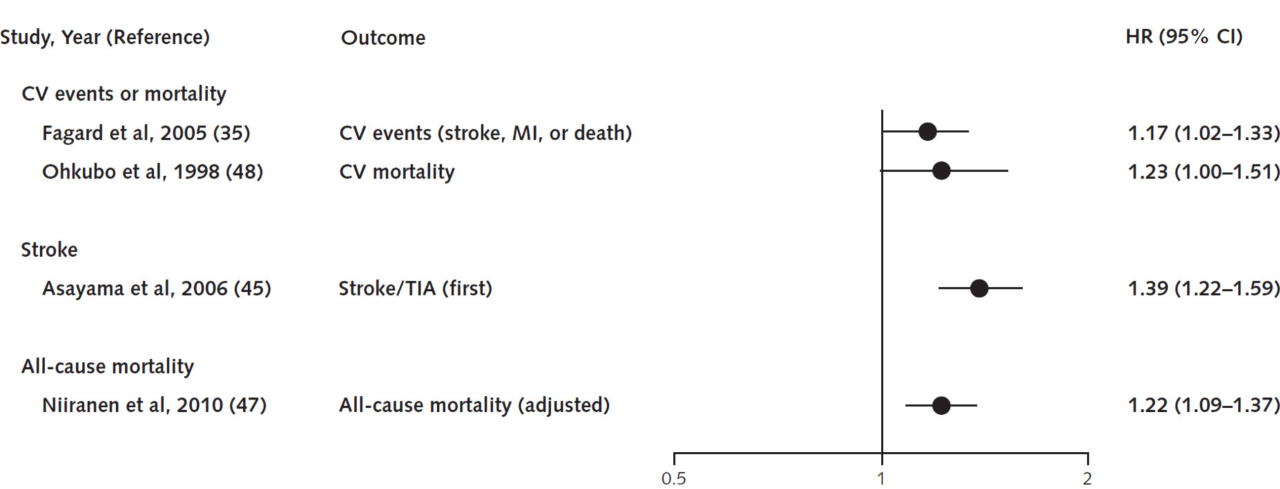
A review in the Annals of Internal Medicine shows convincing, but not finite proof, that home blood pressure measurements are predictive of heart disease. Would it be safe to assume that mobile home blood pressure measurements will present with the same results?
Blood pressure measured by office mercury sphygmomanometry is known to be associated with cardiovascular outcomes (130). We compared Ambulatory Blood Pressure Measurments (ABPM) and Home Blood Pressure Measurements (HBPM )with manual office methods and found that systolic ABPM consistently and statistically significantly predicted stroke and other cardiovascular outcomes independently of Office Blood Pressure Measurements (OBPM). In an exploratory, comparative meta-analysis (n = 13 906), we found no apparent difference among 24-hour, daytime, and nighttime ABPM protocols within our included evidence base. Our results were similar to those of a systematic review by the National Institute for Health and Care Excellence (131), which concluded that ABPM was superior for predicting clinical outcomes, with no protocol favored in a qualitative review of the data (n > 17 621). However, we did not evaluate certain outcomes (such as angina or revascularization) or populations with comorbid conditions (such as diabetes or kidney disease) and only included studies conducted in countries rated “very high” on the Human Development Index. Two other large meta-analyses (one that included 13 843 hypertensive patients [132] and one that analyzed 23 856 hypertensive patients and 9641 randomly recruited persons [133]) reported that nighttime systolic ABPM was a stronger predictor of cardiovascular events than daytime ABPM or OPBM. Evidence gaps suggested by these conflicting meta-analyses include the influence of treatment and age (133) and of composite outcomes and population composition on the predictive values of 24-hour, daytime, and nighttime ABPM. We also found that systolic HBPM predicted cardiovascular outcomes in a pattern similar to that of ABPM; however, too few studies were available to allow us to draw firm conclusions about HBPM.
Researchers at the Cleveland Clinic found the following after testing 55 patients:
Sixty patients were enrolled (mean age 60 ± 12 years), and 55 completed the study. There were 389 simultaneous AHM and TTM recordings. The κ statistic was 0.82, indicating excellent agreement between AHM and TTM recordings. If we consider AF and atrial flutter as one diseased state, the AHM had 100% sensitivity and 97% specificity for the detection of AF and atrial flutter. Only 2% of patients found it difficult to use the AHM, and the large majority (92%) preferred to use the AHM to monitor their AF as opposed to the TTM.
Granted, I don’t have access to the full study - but this is impressive. Larger studies are welcome.
Toward the end of Janisse Flowers’s pregnancy, a nurse at her gynecologist’s office asked her to download an iPhone app that would track how often she text messaged with friends, how long she talked on the phone and how far she traveled each day.
The app was part of an effort by Ms. Flowers ’s health-care provider to test whether smartphone data could help detect symptoms of postpartum depression, an underdiagnosed condition affecting women after they give birth. The app’s developer, San Francisco-based Ginger.io Inc., compared data from Ms. Flowers and nearly 200 other women against their answers to a weekly survey used to diagnose depression. The company says it found that behavioral patterns like decreased mobility on weekends and longer phone calls were associated with poor mood in surveys.
Psychiatric follow-up and diagnoses are very interesting areas for mobile health solutions, although I’m concerned about the validity and security.
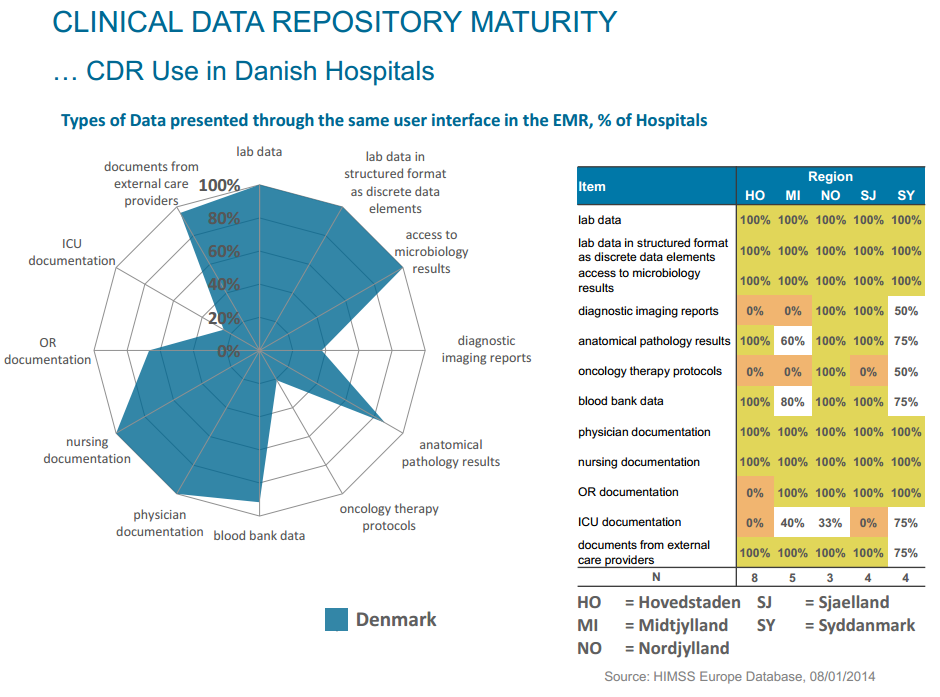
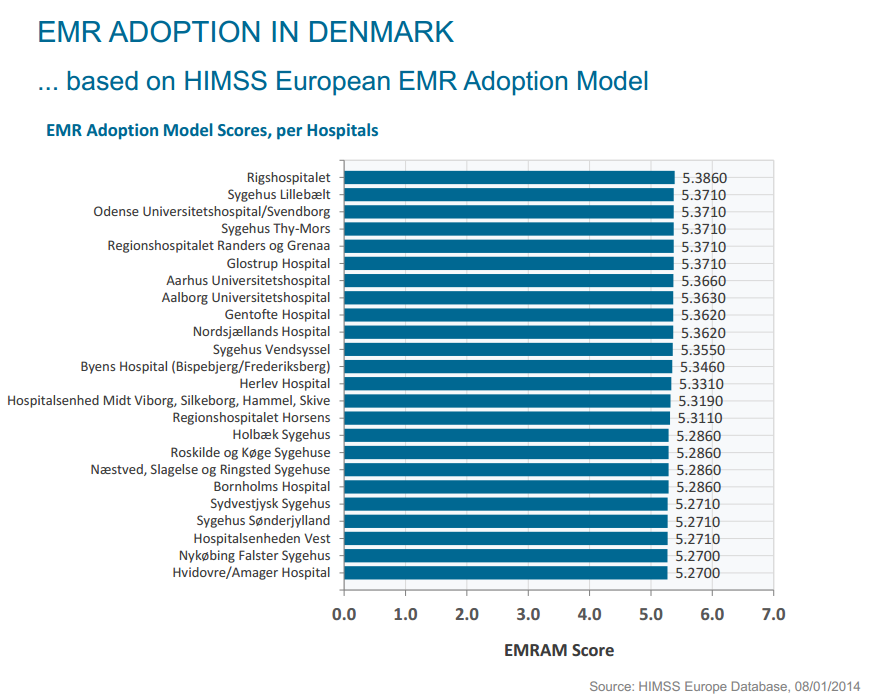
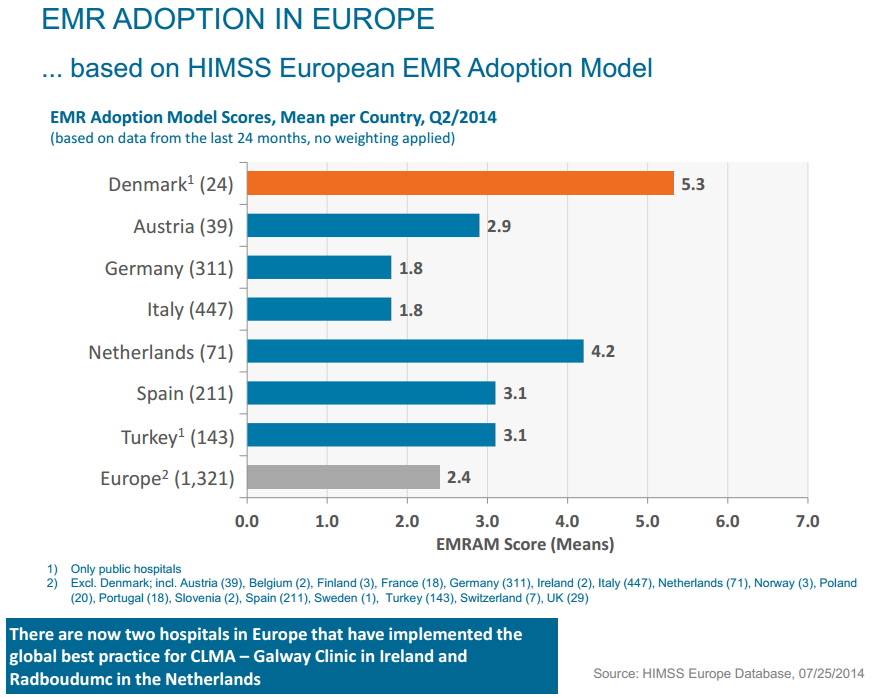
All 24 Danish hospitals received stage 5 scores. At 5.3239, Denmark has the highest average EMRAM score compared to all surveyed countries in Europe, and comes in second to Singapore across all surveyed countries globally.
Evidently, hospitals which achieve Stage 6 and then 7 of the model have significantly higher clinical and financial outcomes. Achieving Stage 6 is the tipping-point towards Stage 7.
Cognitive computers have been dramatically improving over the last few years and now it’s time to understand how these could change the way we practice medicine. Will it replace physicians? No, instead, it will make them better!
The appeal of wearables isn’t their accuracy (they are in fact mostly inaccurate). But as David Pouge points out:
These gadgets allow us, mere untrained mortals, to gauge what only doctors used to measure. We gain knowledge about the workings of our own bodies—by monitoring measurements continuously, not once a year at a physical.
Amputee Makes History with APL’s Modular Prosthetic Limb
“It’s a relatively new surgical procedure that reassigns nerves that once controlled the arm and the hand,” explained Johns Hopkins Trauma Surgeon Albert Chi, M.D. “By reassigning existing nerves, we can make it possible for people who have had upper-arm amputations to control their prosthetic devices by merely thinking about the action they want to perform.”