
https://onlinelibrary.wiley.com/doi/full/10.1111/bdi.13430
Early warning signals observed in motor activity preceding mood state change in bipolar disorder
Norwegian researchers use armbands to register activity levels and correspond this to mood disorders in a population of type II bipolar patients in order to predict depressive episodes.
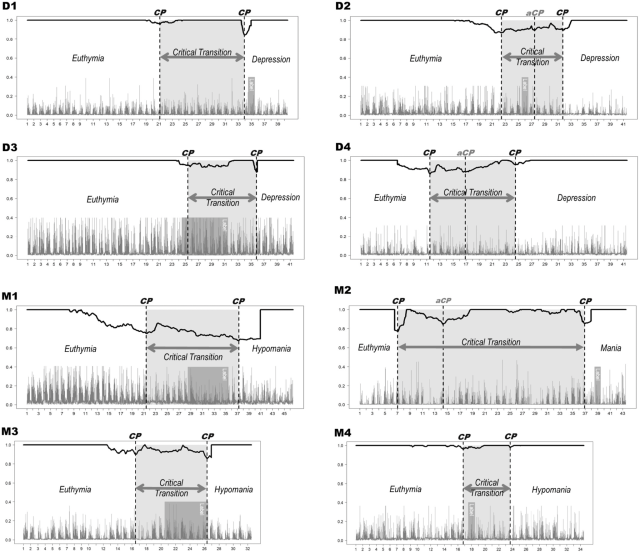
While this is fantastic and supports current hypotheses, I would note the sample size is small and the time for data collection is short. I don’t believe the researchers were blinded either.
Although the clinical findings in this study are interesting, I think there should be more talk about the motion detector and algorithm used to achieve the results. Unfortunately, I’m not qualified to do so but I hope others can comment on this.
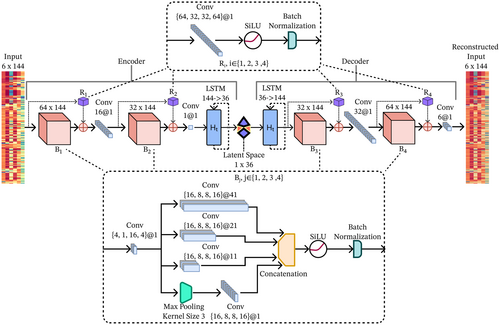
As an initial study this is very promising! I’m looking forward to seeing what the future research shows.
I received this message from prof Riegler (one of the study’s authors):
That’s a general challenge with more medical focused journals to find a good balance between the technical details and still keep it relevant for the audience 😅 but I think the details about the algorithm provided in section 2.3 and 2.4 (including Figure 1) are detailed and far above what you would usually get into a medical journal (of course depends also a bit on the field, some like gastroenterology are more advanced in that regard). Further, as we state in the discussion and conclusion comparative studies with other algorithms and different datasets is future work but that will be more targeted towards the machine learning community (which then also includes datasets that are not related to medicine). Regarding the sensors, they are well known in the field and more details can be found in for example: https://ntnuopen.ntnu.no/ntnu-xmlui/handle/11250/2489595 or https://dl.acm.org/doi/10.1145/3204949.3208125